We will use this resource to study the basics of plant reproduction
jueves, 11 de febrero de 2016

domingo, 31 de enero de 2016
PLANTS I: plant and flower structure
PRE-READING ACTIVITIES
VOCABULARY

VOCABULARY
Plant Structure
Copy this drawing in your note book and try to label it correctly

What Do Different Plant Parts Do?
Plant parts do different things for the plant. Match the different parts of a plant with its definition
________
Roots act like straws absorbing water and minerals from the soil. Tiny root hairs stick out of the root, helping in the absorption. Roots help to anchor the plant in the soil so it does not fall over. Roots also store extra food for future use.
________
They do many things. They support the plant. They act like the plant's plumbing system, conducting water and nutrients from the roots and food in the form of glucose from the leaves to other plant parts. Can be herbaceous like the bendable stem of a daisy or woody like the trunk of an oak tree.
________
Most plants' food is made in them. They are designed to capture sunlight which the plant uses to make food through a process called photosynthesis.
________
They are the reproductive part of most plants. Contain pollen and tiny eggs called ovules. After pollination of the flower and fertilization of the ovule, the ovule develops into a fruit.
________
Provides a covering for seeds. They can be fleshy like an apple or hard like a nut.
________
They contain new plants. They are formed in fruit.
Find the key in this link
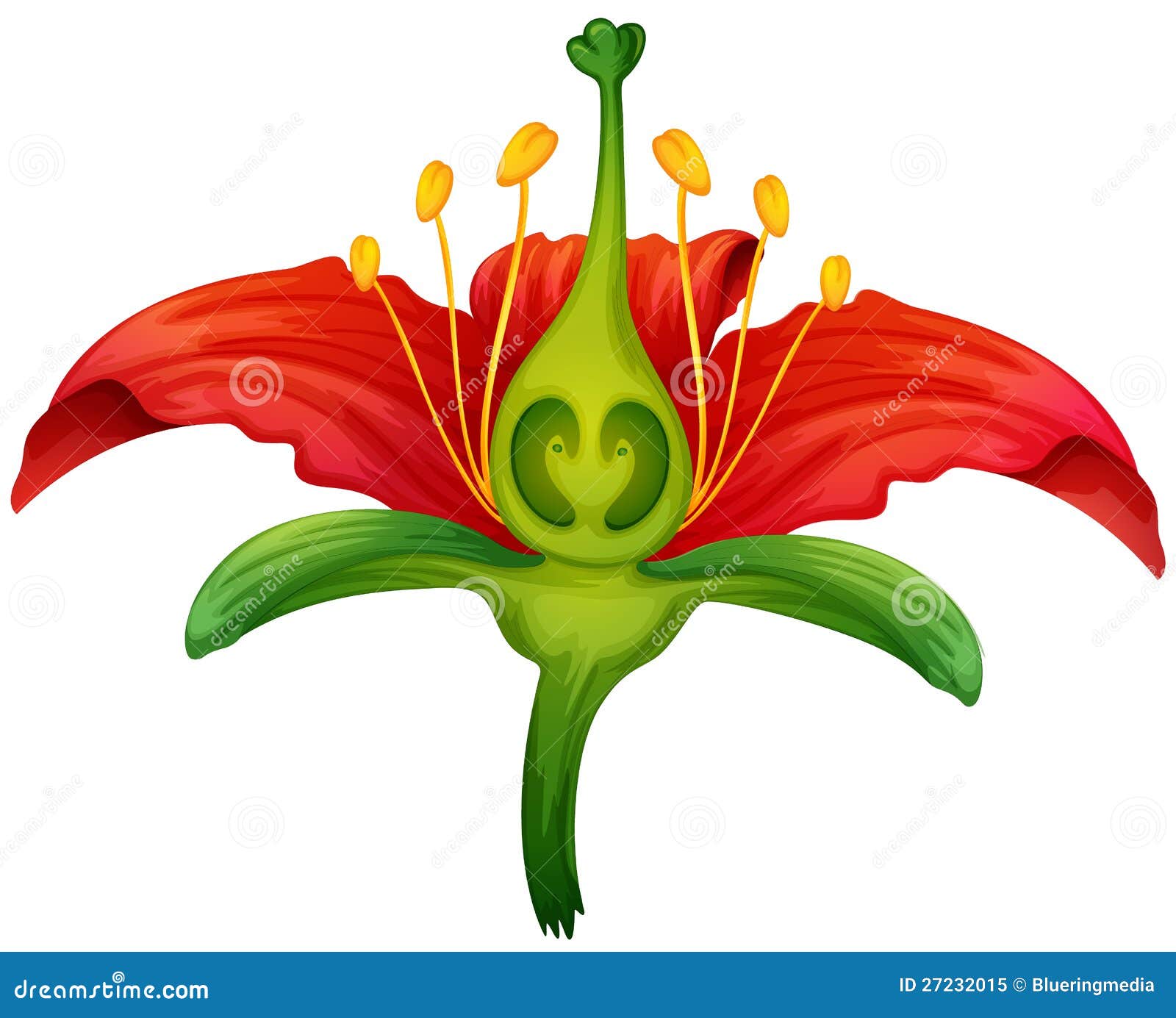
Now, lets focus on flower structure
Let´s discover flower structure by using this funny game (abc Bitesize)
Then draw a diagram of a flower labelled with all its parts
(Use this model)
Plant life cycles
Every living thing goes through changes. Living things grow through different stages. Then they reach the end of their life cycles and die. There are many kinds of plants. Each kind has its own life cycle.
Many plants start their life cycles as a seed. The seed needs certain things or it will not grow into a plant. Sometimes seeds wait in the ground until they can get the things they need. They wait for warmth from the sun. They wait for water. When they have what they need, they start to grow. A tiny little sprout will push out of each seed. The sprouts stretch up until they poke through the dirt and into the air.
The plants continue to grow when they get sunshine and water. The stems grow taller and leaves unfold. More leaves and stems grow on the main stems. The adult plants grow flowers. The flowers of many plants make fruit. The fruit has seeds inside it so more new plants can grow.
New plants look like their parent plants. Seeds from a parent plant will grow into the same kind of plant as the parent. When a seed begins to grow, it is the beginning of another plant life cycle.
Questions:
1) What is the process of living, growing, changing, and dying called?
3) What two things does a seed need to have with it in the ground to be able to grow?
4) Where can you usually find seeds in a adult plant?
5) What kind of plant will a seed grow into?
You can revise your answers here
Many plants start their life cycles as a seed. The seed needs certain things or it will not grow into a plant. Sometimes seeds wait in the ground until they can get the things they need. They wait for warmth from the sun. They wait for water. When they have what they need, they start to grow. A tiny little sprout will push out of each seed. The sprouts stretch up until they poke through the dirt and into the air.
The plants continue to grow when they get sunshine and water. The stems grow taller and leaves unfold. More leaves and stems grow on the main stems. The adult plants grow flowers. The flowers of many plants make fruit. The fruit has seeds inside it so more new plants can grow.
New plants look like their parent plants. Seeds from a parent plant will grow into the same kind of plant as the parent. When a seed begins to grow, it is the beginning of another plant life cycle.
Questions:
1) What is the process of living, growing, changing, and dying called?
2) How do many plants begin?
3) What two things does a seed need to have with it in the ground to be able to grow?
4) Where can you usually find seeds in a adult plant?
5) What kind of plant will a seed grow into?
You can revise your answers here
jueves, 8 de octubre de 2015
LIVING THINGS: Life's Basic Ingredients

lunes, 18 de mayo de 2015
Vertebrates
Let's start with some basic vocabulary
suckle,
warm, temperature, birth,
fur, hard, soft ,
hair, feathers, eggs,
dry, wet, smooth, damp
Brainpop VIDEO about VERTEBRATES
Now you are ready to fill in this VERTEBRATES' WORKSHEET
It is time to summarize the main information about Vertebrates

If you want to know more, explore some of these interesting resources...
Frog dissection
Another vertebrates' video to watch real animals!!
lunes, 6 de abril de 2015
INVERTEBRATES and VERTEBRATES

Before start reading about invertebrates you should remember severals facts about living beings...
Whittaker proposed the five-kingdom taxonomic classification of the world's biota into the Animalia, Plantae, Fungi,Protista, and Monera in 1959.

As you can see in this flash (please, stop at 1 min. 38 s!!!), Animals (Animalia kingdom) can be classified into two main groups:
- Invertebrates: animals without a spine or backbone
- Vertebrates: animals with a spine or backbone
Let's explore invertebrates by watching this funny animation about the diferent types of invertebrates. Visit this website to know interesting data about invertebrates.
Now, try to find their names in this invetebrates' word puzzle search.
Now, it is time to revise the basics about invertebrates by filling this missing word activity.
Try to see if you can identify some invertebrates and sort them into their appropriate groups.
Try to see if you can identify some invertebrates and sort them into their appropriate groups.
To finish, use all your knowledge about invertebrates to solve the invetebrates' crossword. If you need some help to solve it, click here
If you are interested in invertebrates, please visit this link to see amazing invertebrates' photos shooted by the best nature photographers.
sábado, 14 de marzo de 2015
Cell discovery and Cell Structure
Maybe you have no idea about how cells were discoverd. We will explore it throughout this video
Try to answer these questions in order to see if you have got the main topics of this video.
To remember the main ideas and researchers that contribute to Cell Theory, let´s sing a rap...
Once you know more about cell discovery, we can travel inside the cell to learn about cell structure. Click here to go the BBC Bitesize website.
After reading the basic about cells, let´s have a look at this nice animation
Finally, answer this worksheet to check your knowledge about cells
Try to answer these questions in order to see if you have got the main topics of this video.
To remember the main ideas and researchers that contribute to Cell Theory, let´s sing a rap...
Once you know more about cell discovery, we can travel inside the cell to learn about cell structure. Click here to go the BBC Bitesize website.
After reading the basic about cells, let´s have a look at this nice animation
Finally, answer this worksheet to check your knowledge about cells
lunes, 9 de febrero de 2015
Water pollution

Water covers over 70% of the Earth’s surface and is a very important resource for people and the environment. Water pollution affects drinking water, rivers, lakes and oceans all over the world. This consequently harms human health and the natural environment. Here you can find out more about water pollution and what you can do to prevent it.
Using the previous resource we are going to explore:
If you have understand the different causes of pollution you should be able to match them with the photos in this document.
Water and natural disasters. A brilliant solution to purify contaminated water.
Suscribirse a:
Entradas (Atom)